History has a way of leaving marks that never quite fade.
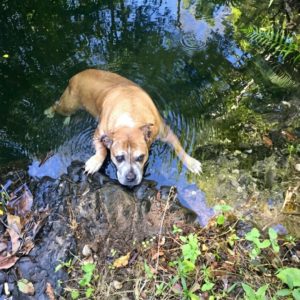
In the heart of the Chernobyl Exclusion Zone (CEZ), where the worst nuclear disaster in human history occurred forty years ago, life has taken a strange and resilient path. While humans fled the radiation in 1986, their pets were left behind—forced to survive in a world of silence and invisible danger. Today, their descendants roam the rusting remains of the power plant, the undisputed mascots of a living laboratory.
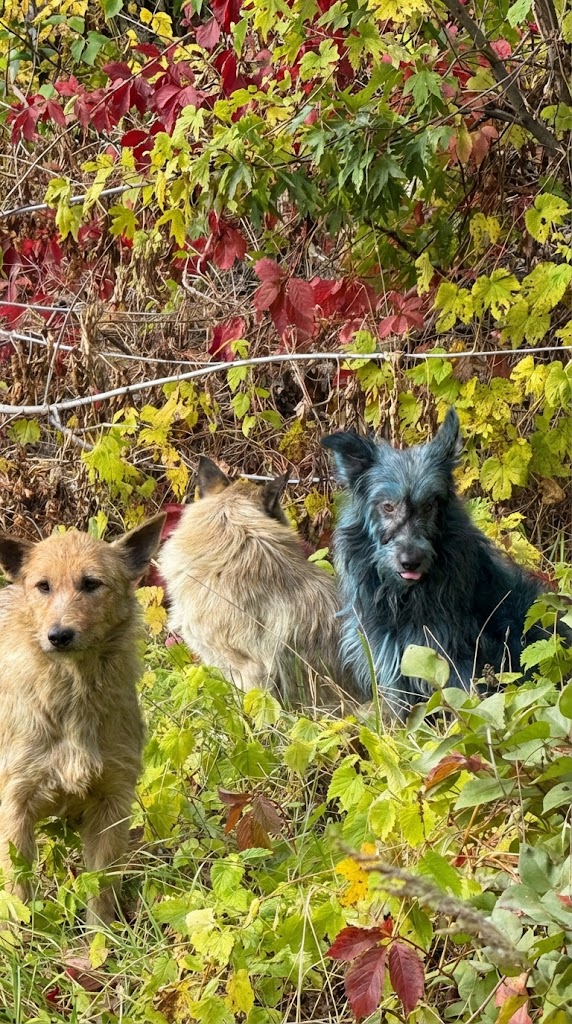
Recently, the internet was set ablaze when photos of bright blue dogs began circling online. In a place synonymous with mutation and fallout, many feared the worst. Was this the final, visual proof of the long-term genetic toll of radiation?
VIDEO: The Blue Hounds of Chernobyl: A Surreal Sight in the Exclusion Zone
A Mundane Truth in a Radioactive World
The truth, as it turns out, is a little less “sci-fi” and a lot more “dog-like.”
Scientists and rescuers from the Clean Futures Fund—an organization dedicated to the health of the Chernobyl dogs—were on the ground when they spotted the sapphire-hued strays. After the initial shock wore off, the veterinary team investigated and found a much more terrestrial culprit: a leaking porta-potty.

“They appear to have been rolling in a substance that had accumulated on their fur,” explained Dr. Jennifer Betz. These curious canines had likely discovered an old portable toilet and treated the blue chemical dye inside as their personal playground. Aside from their startling new look, the dogs were found to be active, healthy, and completely unrelated to any radioactive freak of nature.
VIDEO: Inside the Exclusion Zone: Measuring Radiation and the Daily Mission to Protect the Dogs
Survival in the Shadow of the Reactor
While the blue fur was a temporary accident, the survival of these dogs is a permanent miracle. There are approximately 500 dogs currently living in the CEZ—descendants of the pets that residents were forced to abandon during the evacuation.
Living in the zone isn’t easy. The levels of radiation are still high enough to require rescuers to wear specialized equipment and carry dosimeters at all times. Yet, these dogs have adapted. Genetic studies show they are now distinct from any other dog population in Eastern Europe. Whether this is due to the radiation itself or decades of isolation, they have become a symbol of resilience.
Xem bài viết này trên Instagram
The Daily Bread of Kindness
For these semi-feral packs, life depends on the “village” of rescuers who refuse to forget them. Since 2017, volunteers have worked tirelessly to vaccinate, tag, and sterilize over 1,000 animals to keep the population healthy and controlled.
But beyond the medical care, there is the simple, human act of feeding. Every trip into the zone is a logistical challenge, navigating through checkpoints and radiation hotspots to bring nourishment to the animals that wait near the plant’s ruins.
VIDEO: Feeding the Forgotten: The Heartwarming Journey of Bringing Food to Chernobyl’s Strays
Beyond the Blue
Lady and her “blue” friends are a reminder that even in the most desolate places on Earth, life persists with a touch of humor and a lot of heart. The blue dye will eventually wash off or grow out, but the mission to care for the descendants of Chernobyl’s lost pets continues.
Their journey reminds us that:
- Nature is surprisingly resilient, even in the face of our greatest mistakes.
- Not every change is a mutation; sometimes, it’s just a dog being a dog.
- Compassion knows no boundaries, not even the fences of a radioactive exclusion zone.
Today, the dogs of Chernobyl are no longer just “strays.” They are survivors, scientists’ test subjects, and most importantly, a living link to the families who had to leave them behind. They live in the light of the sun and the shadow of the past, waiting for the next bowl of food and a kind hand to tell them they haven’t been forgotten.